Two lines on a Czech listing tell you a lot about a flat before you see it: the building's construction (stavba) and its energy class (energetická třída). The first says how the building was built: of brick, of prefabricated concrete panels or around a concrete frame. The second grades its energy use from A to G. Both are easy to misread. A flat in a panel block can be warm, quiet and newly renovated, and a G on the label often means only that the agent was never given the certificate.
What do the building types on a listing mean?
A listing states the construction in one word, and Bytky's filters group the words the same way:
| On the listing | In English | What it is | Where you'll meet it |
|---|---|---|---|
| cihlová (cihla) | Brick | Load-bearing walls of brick or masonry blocks | Tenement blocks (činžovní domy) from before the Second World War, villas, and many new builds |
| panelová (panel, panelák) | Concrete panel | Walls and floors of prefabricated reinforced-concrete panels, put together on site | The housing estates (sídliště) built from the 1950s to the early 1990s |
| skeletová (skelet) | Frame construction | A frame of reinforced-concrete or steel columns and floors, with lighter walls between them | Many new builds, and offices or factories turned into flats |
| smíšená | Mixed | More than one of these | Older buildings with a later extension or attic |
| dřevostavba | Timber | A wooden frame or wooden panels | Mostly houses |
The word describes how the building stands up, not how good it is to live in. A tenement can have rotting windows and a panelák that has never been touched can be draughty, while a renovated one can be as comfortable as a new build. Read the construction together with two other lines: the condition (stav) and the energy class.
Here is how the flats for sale in Prague are built, from the listings on Bytky today:
What is living in a panelák like?
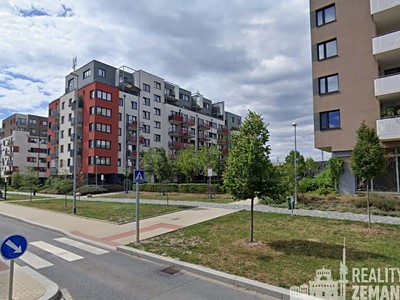
Panel blocks were built quickly to standard designs, so the flats on one estate look much alike: practical layouts, a lift in the taller blocks, often a balcony or a loggia, and green space, schools and shops planned in between. What differs from one block to the next is what has been done since.
- Heat. The original panels were poorly insulated, and heat escaped through the joints between them. A block that has been insulated (zateplení) and had its windows replaced is far cheaper to keep warm.
- Sound. Concrete floors carry footsteps and knocking from the flats around you. Go to a viewing at an hour when the neighbours are home, and listen.
- The core. Many panel flats were built around a prefabricated bathroom-and-toilet unit, the bytové jádro, often lined with a laminate called umakart. A listing that mentions a brick core (zděné jádro) means it has been rebuilt.
- Risers and the lift. The shared water and waste pipes (stoupačky) and the lift belong to the building, and replacing them is a large job the owners pay for together.
These panel flats were listed as renovated most recently in Prague:
What does a revitalised panel building mean?
Revitalizace is a panel building renovated as a whole: insulated on the outside, with new windows, new risers, a repaired or new lift, repaired balconies and often a new roof. The owners' association (SVJ) or the cooperative decides on it and pays for it from the repair fund, often with a bank loan the owners repay through their monthly contributions.
If you're buying, ask what has been done and when, whether a loan is still being repaid, and what the owners plan next. The association's minutes and the repair fund's balance show all three. If you're renting, a renovated block mostly shows in the heating, which you pay through the service charges.
What about brick buildings?
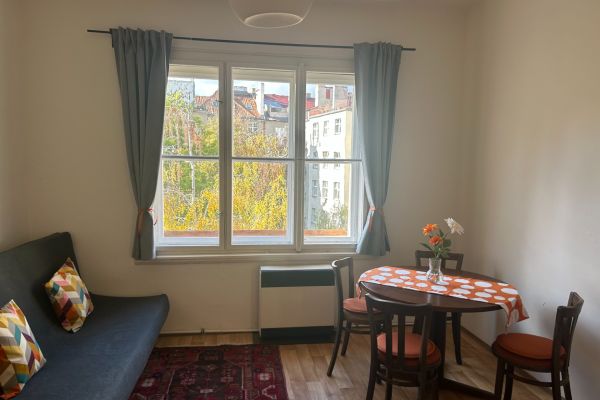
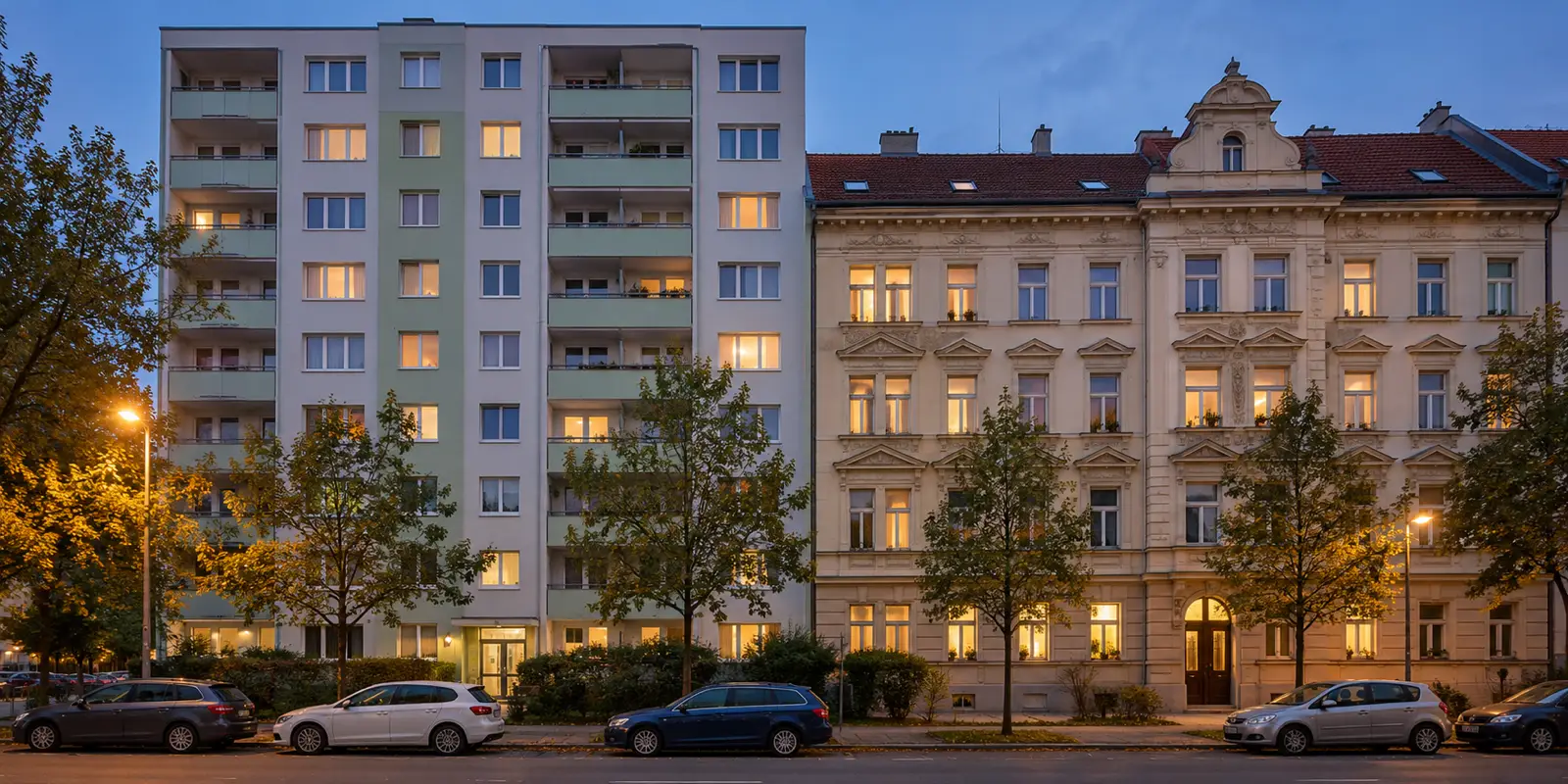
Old brick tenements have high ceilings, thick walls, tall windows and often wooden floors and decorated staircases. They can also have old wooden windows, old wiring and pipes, no lift, and courtyard flats that see little sun. "Renovated" on a listing usually describes the flat, not the building, so ask about both: when the roof, the risers and the façade were last repaired.
Newer brick buildings are built of modern blocks and insulated like any other new build, so for a flat built in the last twenty years the word brick tells you little. Brick flats in personal ownership for sale are one filter away in the explorer.
And frame buildings and new builds?
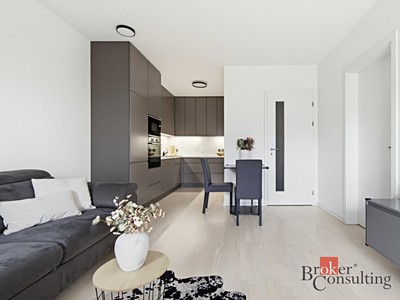
Most new blocks of flats stand on a reinforced-concrete frame, filled in with brick or blocks, so the same kind of new build can be listed as frame, brick or mixed. Every new building has to meet the standard of a nearly zero-energy building,1 so new builds usually carry a good energy class. How much you hear the neighbours depends on how the floors and walls were built, so ask the developer about sound insulation and listen at the viewing.
What does the energy label measure?
The energy performance certificate, průkaz energetické náročnosti budovy (PENB), grades how much energy a building needs for heating, cooling, hot water, ventilation and lighting. An energy specialist draws it up, and it's valid for ten years, or until the building is substantially altered or its heating is replaced.2
The class compares the building with a reference building of the same kind, shape and size, given the properties the regulation sets as the standard.3 On a listing, the class shown is the one for primary energy from non-renewable sources: the fossil energy the building uses, counted at its source.4
| Class | In Czech | In English |
|---|---|---|
| A | mimořádně úsporná | Exceptionally efficient |
| B | velmi úsporná | Very efficient |
| C | úsporná | Efficient |
| D | méně úsporná | Less efficient |
| E | nehospodárná | Inefficient |
| F | velmi nehospodárná | Very inefficient |
| G | mimořádně nehospodárná | Exceptionally inefficient |
The class names come from the regulation.5 Two things trip people up:
- It's usually the building's label. A certificate for a whole building also serves for each flat in it,6 so a corner flat under the roof and a flat in the middle of the block share one class, even though their heating bills won't be the same.
- It grades the building, not your bills. What you pay depends on how the flat is heated (district heating, a gas boiler or electricity), on the prices and on how you live. Ask for the last year's bills or the last service charge settlement too.
These are the newest flats to rent in Prague with a class C or better:
Why do so many listings show a G?
The owner of a flat or building that's sold or let must have a certificate, show it to you before you sign, hand it over when you sign, and make sure the class is in the advert.7 An owner who uses an agent must give the agent the certificate's graphic part (the coloured scale). An agent who doesn't get it has to state the worst class: G.8
So a G on a listing means one of two things: either the building really is in the bottom class, or nobody gave the agent the certificate. The listing can't tell you which, so ask to see it. The owner has to show it to you before you sign anyway.
There are two exceptions:
- A building finished before 1 January 1947, and not substantially altered since, needs no certificate for a sale or a let, if both sides agree to that in writing.9
- A flat's owner who asked the owners' association for the certificate in writing and didn't get it can give you the bills for the flat's electricity, gas and heat from the last three years instead.10
Compare the energy classes of Prague's flats to rent and flats for sale today. “Not stated” counts the listings that give no class at all:
What should you ask?
Whatever the building, ask for the energy certificate and the last bills. Then ask what the construction calls for:
- A panelák: has the building been insulated, and have the risers, windows and lift been replaced? When? Is a loan for it still being repaid?
- An old brick building: when were the roof, the risers and the façade last repaired? Are the windows original? Is there damp in the cellar?
- A new build: what class does the certificate give, how were the floors soundproofed, and what does the developer guarantee and for how long?
Each listing on Bytky now has a short list of questions picked from its own facts, in Czech with your language under each, ready to copy for the agent. The viewing checklist has the full set, for renting and for buying.
Find them on the map
The map shows every brick flat for sale in personal ownership in Prague. Change the construction or the energy class in the filters, under Building, to compare.
You can also start from panel flats to rent or flats to rent with class B or better. Every other word on a listing, from kauce to SVJ, is in the property glossary.
What is a panelák?
A block of flats built of prefabricated reinforced-concrete panels, put together on site. Most were built on the housing estates (sídliště) from the 1950s to the early 1990s, and many have been insulated and renovated since.
Is brick better than panel?
Not by itself. An old brick tenement has high ceilings and thick walls but may have old windows, pipes and no lift. A renovated panelák can be warm and practical. Ask what has been done to the building and when.
What does energy class G mean on a Czech listing?
Either the building is in the worst class, or the agent wasn't given the certificate and so had to state G, as the law requires. Ask to see the certificate: the owner must show it before you sign.
Does the energy label apply to my flat or the whole building?
In a block of flats, usually the whole building: a certificate for the building also serves for each flat in it. A flat can have its own only if its heating is its own, or metered and controlled apart from the rest of the building.
How long is a PENB valid?
Ten years from when it's issued, unless the building is substantially altered or its heating, cooling or hot-water system is changed sooner.
Sources
-
Act 406/2000 Coll., on energy management, §7(1). ↩
-
Act 406/2000 Coll., §7a(4). ↩
-
Decree 264/2020 Coll., on the energy performance of buildings, §2(a) and §9(6). ↩
-
Decree 264/2020 Coll., Annex 2, note on information and advertising materials. ↩
-
Decree 264/2020 Coll., Annex 2. ↩
-
Act 406/2000 Coll., §7a(8) and (9). ↩
-
Act 406/2000 Coll., §7a(2)(a) to (d) and §7a(3)(a) to (c). ↩
-
Act 406/2000 Coll., §7a(2)(e) and §7a(3)(d). ↩
-
Act 406/2000 Coll., §7a(10). ↩
-
Act 406/2000 Coll., §7a(7). ↩