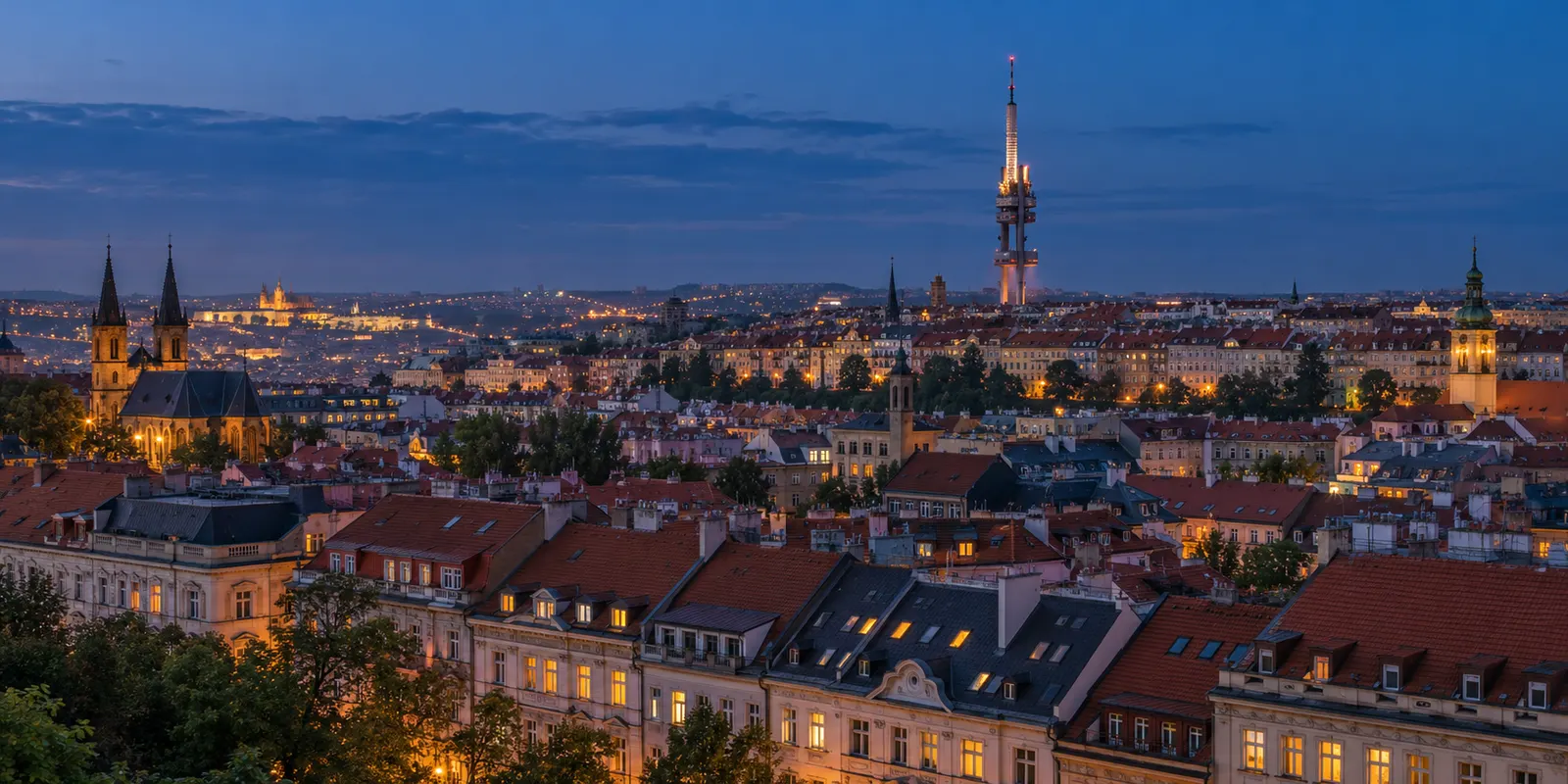
There's no single best neighbourhood in Prague. There's the one that fits your commute, your budget and the way you live. Vinohrady and Karlín are where many newcomers start looking, but Holešovice, Smíchov, Dejvice and others each suit someone. Here are ten neighbourhoods, what each is like and how it's connected, each with its market live from today's listings.
How is Prague divided?
Prague's districts are numbered, Praha 1 in the historic centre to Praha 22 at the edge. Your address, your town hall and your schools go by district. But the neighbourhoods are older. They're the historic cadastral areas (katastrální území), such as Vinohrady, Žižkov and Karlín, and they don't follow district lines. Vinohrady lies mostly in Praha 2, with its eastern parts in Praha 3 and Praha 10. Listings name both, so a flat in "Praha 2 – Vinohrady" and one in "Praha 10 – Vinohrady" may be a few streets apart.
How do you choose a neighbourhood?
Start from where you'll go every day. A flat by a metro station can be closer in minutes than a flat nearer the centre by distance. Then decide what kind of building you want:
| Building | In Czech | What it's like |
|---|---|---|
| Apartment house | činžovní dům | High ceilings and thick brick walls, often without a lift, from around 1900 |
| Interwar building | prvorepublikový dům | Lighter flats, often with a lift, from the 1920s and 1930s |
| Panel building | panelový dům | Prefabricated blocks on estates, mostly from the 1960s to the 1980s |
| New build | novostavba | Lifts, parking and better energy classes, usually at a higher price per m² |
The live blocks below show each neighbourhood's market today: how many homes are listed, what a two-room flat rents for with charges, the median asking price per m² of flats for sale and how long homes stay on the market. They update every day, so compare them rather than any figure you read elsewhere.
To narrow the list first, the neighbourhood finder ranks every part of Prague by your budget, the layout you need, the trip to the place you pick and what matters to you, from quiet nights to schools, and says why each one is there.
Last, check what's outside the windows. A main road, a tram line or a street of late bars changes a flat more than its district does. Visit at rush hour and again on a Friday night before you sign.
What are Vinohrady, Žižkov and Vršovice like?
These three sit east of the centre, next to each other, and are easy to reach from it.
Vinohrady
Wide streets of ornate apartment houses, with Náměstí Míru and its church at the western end and the parks of Riegrovy sady and Havlíčkovy sady at the edges. It's full of cafés, restaurants and small shops, and the market on Jiřího z Poděbrad square draws people from all over. Line A stops at Náměstí Míru, Jiřího z Poděbrad and Flora, and line C at I. P. Pavlova on its western edge.
Žižkov
Vinohrady's rougher, livelier neighbour, mostly in Praha 3. It's hilly and dense, with the TV tower in the middle and the Vítkov hill and its memorial on the northern side. It's a short walk from the main railway station, Praha hlavní nádraží. Line A runs along its southern edge, and trams cross it.
Vršovice
South of Vinohrady in Praha 10, a neighbourhood of apartment houses with a strong local life around Krymská street and the football ground of Bohemians. There's no metro station inside it, but trams reach Náměstí Míru (line A) and I. P. Pavlova (line C) in minutes, and Praha-Vršovice is a railway station.
What about Karlín, Libeň and Holešovice, to the north?
These three line the Vltava to the north and north-east of the centre. All were industrial once, and all are changing fast.
Karlín
Founded in 1817 as Prague's first suburb, Karlín is flat and laid out in a grid between the river and the Vítkov hill. After the flood of 2002 it was rebuilt, and its restored apartment houses now stand beside offices and new builds. Line B stops at Křižíkova and Invalidovna, and Florenc, on lines B and C and by the main coach station, is at its western end.
Libeň
East of Karlín, mostly in Praha 8, a mix of old Libeň around its chateau, apartment houses and new building on former industrial land. Line B stops at Palmovka and, on its eastern edge, at Českomoravská, by the O2 arena.
Holešovice
A former port and industrial quarter in a bend of the Vltava, in Praha 7. Its old factories and warehouses hold galleries, studios and new flats, and the Holešovice market, Pražská tržnice, is here. Letná park lies above it, and Stromovka park is next door. Line C stops at Vltavská and Nádraží Holešovice, which is also a railway station. The Letná plateau, between Holešovice and Bubeneč, is mostly reached by tram.
What are Smíchov and Nusle like?
Both are south of the centre, close to it, and both are crossed by main roads and lines.
Smíchov
On the left bank, south of Malá Strana, in Praha 5. Smíchov grew around factories and the Staropramen brewery, and Anděl is now one of the city's busiest shopping and office hubs. Line B stops at Anděl and Smíchovské nádraží, a railway station too. New builds line the river further south.
Nusle
A valley between Vinohrady and Pankrác, in Praha 4 and Praha 2, under the Nusle Bridge, which carries line C over it. It's quieter in its side streets than on its main road. Vyšehrad and its fortress are a short walk away. Line C stops at Vyšehrad, at the southern end of the bridge, and at Pražského povstání.
Why do people choose Dejvice and Břevnov?
The west of the city, in Praha 6, is greener and calmer, with good links to the centre.
Dejvice
Laid out in the 1920s around Vítězné náměstí, with wide streets, interwar blocks and villas. Its universities, including the Czech Technical University (ČVUT), give it students and research jobs. Line A stops at Dejvická and Hradčanská, and the centre is a few stops away.
Břevnov
West of Prague Castle, around Břevnov Monastery, founded in 993, with its brewery and gardens. It's a quiet neighbourhood of apartment houses, villas and greenery. Trams run along Bělohorská street to the centre, and line A's Petřiny station serves its northern part.
How do you compare neighbourhoods on Bytky?
Every neighbourhood has an area page, such as Vinohrady or Karlín. It lists the homes for rent and for sale on a map and in a table, follows the market, and shows getting around: the lines that stop there and a transit score. It also counts the shops, schools, doctors and parks within walking distance.
To compare by your own commute, save the places you go to, such as your office or a school, and say when you need to be there. The commute filter then shows the trip on every listing, door to door on real PID timetables, and filters and sorts homes by it. It covers Prague and Central Bohemia. A free account saves one place, and Bytky Plus up to five.
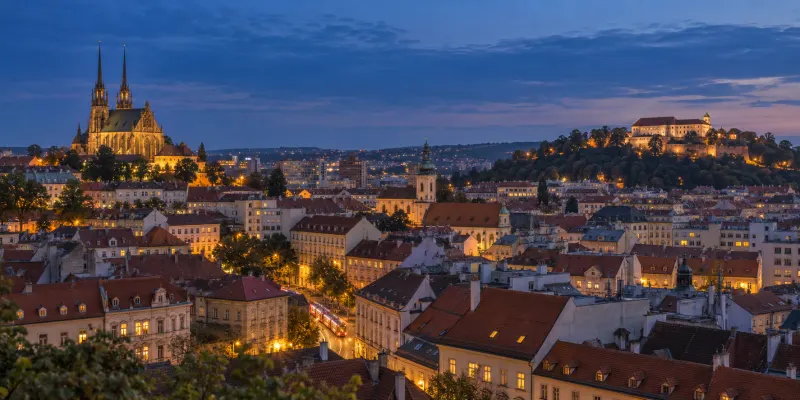
Looking at Brno as well? Our guide to where to live in Brno walks through its neighbourhoods the same way.
Here is every flat to rent in Prague on the map. Narrow it with the filters, or zoom into the neighbourhoods above:
What is the best area to live in Prague for expats?
There's no single best one. Vinohrady and Karlín are popular for their streets, cafés and metro, Holešovice and Smíchov for their mix of old and new, and Dejvice and Břevnov for green and calm. Start from your commute and compare the area pages.
What's the difference between Praha 2 and Vinohrady?
Praha 2 is a district, an administrative unit with its own town hall. Vinohrady is a historic neighbourhood that lies mostly in Praha 2 and partly in Praha 3 and Praha 10. Listings often name both.
Which Prague neighbourhoods are best connected?
Those on the metro: Vinohrady, Karlín, Smíchov and Dejvice each have more than one station. Vršovice has none inside, but trams reach the metro in minutes.
Should I live in the historic centre?
Praha 1 is beautiful, but busy with visitors day and night, with fewer everyday shops and schools. Many people who move to Prague prefer the neighbourhoods just outside it, a few stops away.
How do I find a flat near my work in Prague?
Save your workplace on Bytky and say when you need to arrive. The commute filter then shows the trip by public transport on every listing, and filters and sorts homes by it.